
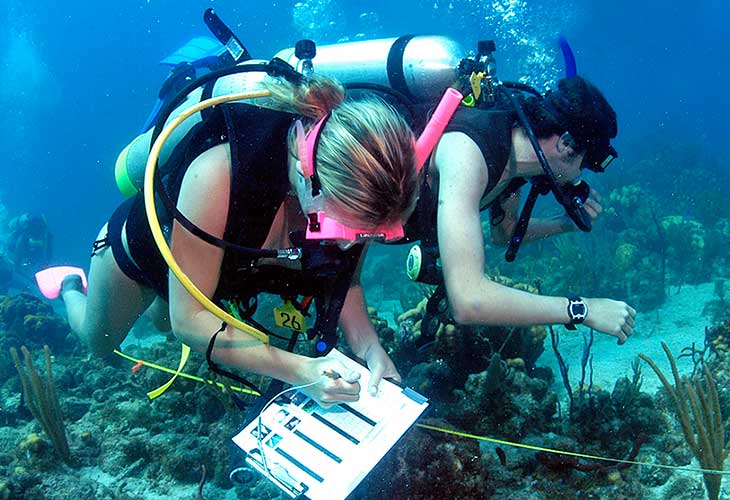
A marine biologist's place is underwater!
Oceans cover around 71% of Earth's surface and support an astonishing variety of life, from microscopic plankton at the base of the food web to enormous whales. Pollution, commercial fishing, acidification and climate change are among the pressures threatening that life. Studying and protecting marine species matters more than ever. That's where marine biology comes in.
Marine biologists do much of their research underwater: discovering and monitoring species' life cycles, mapping their habitats and studying how they respond to currents and other environmental factors. Their work brings together marine biology, ecology, oceanography, zoology and botany—algae play an essential role. They also need diving skills: understanding the equipment, basic techniques and how the underwater environment affects their own bodies.